
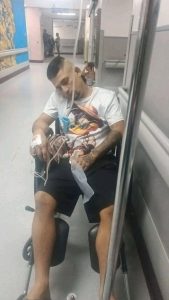
A Critical Situation That Escalated
According to early reports, the young man was transported to the hospital in urgent need of care. Witnesses described a situation that required immediate medical intervention.
Hospital staff, already managing multiple critical cases, were reportedly under immense pressure. Overcrowding in the emergency department meant that immediate attention could not be provided as quickly as needed.
In medical emergencies, timing is often the most crucial factor. Even short delays can significantly affect outcomes. In this case, valuable minutes passed while the patient awaited treatment.
Despite the efforts of the medical team, his condition worsened. Tragically, he passed away in the hospital corridor before receiving the level of care required to stabilize him.
The image of a patient dying while waiting for treatment has since become a powerful representation of the strain facing healthcare systems.
Hospital Response
Following the incident, hospital officials released a statement expressing their sorrow over the loss of life. They emphasized that staff members worked under extremely difficult conditions and did everything possible within the constraints they faced.
The hospital acknowledged several key factors:
- The facility was operating beyond capacity
- Emergency teams were handling multiple critical patients simultaneously
- Overcrowding affected response times and patient flow
Officials also confirmed that an internal review would be conducted to understand the sequence of events and identify areas for improvement.
They noted that the incident had a strong emotional impact on the medical staff involved.
Investigation Initiated
Local health authorities have launched a formal investigation to establish what happened and whether any procedural or systemic issues contributed to the outcome.
The investigation will examine:
- Emergency response timelines
- Staffing levels during peak hours
- Availability of equipment and treatment space
- Coordination between departments
Authorities have urged the public to avoid speculation until verified findings are released.
A System Facing Increasing Pressure
This case has reignited broader concerns about healthcare system challenges:
Overcrowding
Many hospitals are operating at or beyond capacity, leading to delays and increased pressure on staff.
Staffing Shortages
A lack of healthcare professionals contributes to slower response times and higher workloads.
Limited Resources
Access to beds, equipment, and infrastructure is often stretched thin.
Delays in Emergency Care
Even minor delays can have serious consequences in urgent situations.
The Human Side of the Story
Beyond system issues, this tragedy represents a life lost far too soon.
A young individual with hopes and a future that will never be realized.
For the family, the loss is immeasurable. They have requested privacy during this difficult time.
Public Reaction
The incident has prompted strong public reactions, including:
- Concern about healthcare access
- Frustration with system limitations
- Sympathy for the family
- Recognition of pressure on healthcare workers
Calls for improvements in healthcare infrastructure have intensified.
The Pressure on Healthcare Workers
Healthcare professionals often work in high-pressure environments with long hours and emotional strain.
In resource-limited situations, they may face difficult decisions about prioritizing care.
The emotional toll of such experiences can be significant.
Calls for Improvement
Experts and policymakers have highlighted the need for reforms:
- Expanding hospital capacity
- Increasing staffing levels
- Improving emergency procedures
- Investing in infrastructure and equipment
- Strengthening coordination between facilities
Accountability and Transparency
Authorities have emphasized that a transparent review process will help identify improvements and rebuild trust.
A balanced and evidence-based approach will be essential in understanding the full context.
A Wake-Up Call
This incident highlights the need to:
- Address resource shortages
- Improve system efficiency
- Prioritize patient safety
Experts warn that without change, similar situations could occur again.
Looking Ahead
As the investigation continues, there is hope that lessons learned will lead to meaningful improvements.
While nothing can undo the loss, steps can be taken to prevent similar outcomes in the future.
Final Reflections
The loss of a young life in a hospital setting is a tragedy that resonates deeply.
It raises important questions about preparedness, resources, and response.
For the community, it is a reminder of the importance of accessible healthcare.
For the system, it sends a clear message:
Improvement is not optional—it is essential.
Leave a Reply