
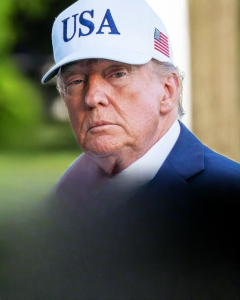
In moments of political uncertainty, the world often turns its attention to how leaders test the limits of power, rhetoric, and public perception. Recent remarks attributed to Donald Trump have sparked discussion, not only for their unusual nature but for the broader questions they raise about leadership, sovereignty, and democracy in a globalized era.
According to widely circulated reports, Trump suggested that if he were unable to pursue another presidential term in the United States, he might consider running for office in another country—specifically pointing to Venezuela. Whether interpreted as rhetorical or symbolic, the idea has prompted debate across political and academic circles.
The Framework of Presidential Term Limits
The United States operates under a constitutional system designed to prevent the concentration of executive power. The Twenty-second Amendment limits presidents to two elected terms, a rule established after Franklin D. Roosevelt served four terms.
Within this framework, the notion of seeking leadership abroad raises a different question—not about constitutional loopholes, but about the conceptual boundaries of political identity and authority.
Venezuela as a Political Symbol
To understand why Venezuela appears in this discussion, it is important to consider its recent history. The country has faced years of political instability under Nicolás Maduro, alongside economic challenges and contested elections.
In early 2026, U.S. involvement in Venezuela reportedly intensified, adding complexity to an already sensitive geopolitical situation. As a result, Venezuela has become a symbol in broader debates about democracy, sovereignty, and international influence.
Power Beyond Borders
The idea of political leadership crossing national boundaries challenges traditional norms. Historically, leadership has been closely tied to citizenship, cultural understanding, and long-term engagement within a nation’s political system.
Key concerns raised by such discussions include:
- Sovereignty – a nation’s right to govern itself
- Legitimacy – acceptance by the population
- Precedent – implications for global political norms
Even as globalization increases interconnectedness, political authority remains largely rooted in national identity.
The Role of Media and Perception
In today’s digital landscape, statements by political figures can quickly become global conversations. Social media amplifies these moments, often leading to multiple interpretations:
- Some view them as satire or exaggeration
- Others see strategic messaging
- Some interpret deeper symbolic meaning
This creates a fragmented discourse where intent and perception may diverge significantly.
Democracy Under Pressure
At the core of this discussion is a broader question: how resilient are democratic norms when challenged—even rhetorically?
Democracy depends on:
- Respect for constitutional limits
- Peaceful transitions of power
- Accountability to citizens
When these principles are questioned, it can introduce uncertainty into public discourse. Supporters of unconventional rhetoric may see it as bold and disruptive, while critics warn it risks undermining institutional stability.
A Changing Political Landscape
Modern politics is evolving rapidly, shaped by:
- Global visibility of leaders
- Narrative-driven communication
- Increased scrutiny of past statements
In this environment, even unlikely ideas can gain traction as part of wider debates about leadership and governance.
Conclusion
The suggestion that a political leader could seek office in another country may seem improbable. Yet its importance lies not in feasibility, but in what it reveals about contemporary political discourse.
It highlights the growing intersection of power and global influence, the role of rhetoric in shaping perception, and the ongoing tension between tradition and change in democratic systems.
Ultimately, such moments serve as a reminder: in a rapidly evolving world, the boundaries of leadership—and the conversations around them—are constantly being tested.
Leave a Reply