
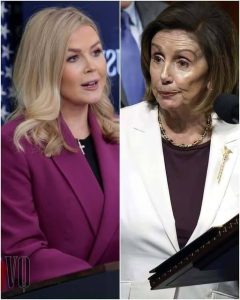
 In a highly charged moment within Washington’s political arena, a notable exchange unfolded that drew widespread attention from lawmakers, analysts, and the media. What began as a routine discussion on trade policy quickly evolved into a compelling display of strategy, rhetoric, and contrasting communication styles.
At the center of the exchange was a debate over tariffs on Chinese goods—an issue that has long divided policymakers. Supporters argue tariffs are necessary to protect domestic industries, while critics warn of economic consequences and strained international relations. Against this backdrop, the discussion carried significant weight.
The turning point came when one participant adopted a precise and calculated approach. Rather than relying on general arguments, she grounded her position in documented statements previously made by her counterpart. By referencing these earlier remarks, she introduced accountability into the conversation and shifted the direction of the debate.
Observers immediately sensed a change in tone. The atmosphere, initially formal, became more intense as each point was delivered with clarity and backed by direct quotations. This strategy not only strengthened her argument but also placed her opponent in a difficult position—forced to reconcile past statements with current positions.
As the exchange continued, the contrast in communication styles became increasingly clear. One side remained composed and methodical, focusing on substance and consistency. The other began to show visible signs of frustration. What started as a controlled discussion gradually shifted into a more emotionally charged exchange.
This moment marked a critical turning point. Raised voices and animated reactions contrasted sharply with the steady, composed delivery of the opposing side. For many observers, this highlighted the importance of maintaining control in high-pressure situations.
Political analysts later described the exchange as a textbook example of strategic communication. Using an opponent’s own words is a well-known rhetorical technique, but its effectiveness depends on timing, accuracy, and delivery. In this case, all three aligned.
The broader context amplified the impact. At a time when tariff policies were influencing markets and public opinion, any high-profile debate carried wider implications. The ability to shape the narrative—even briefly—was significant.
Following the exchange, reactions quickly spread across media and online platforms. Analysts focused not only on the policy discussion but also on the communication strategies involved. Many emphasized the effectiveness of composure under pressure, while others highlighted the risks of inconsistency in public statements.
The moment also underscored a key reality of modern political discourse: past statements are always part of the conversation. In an era of instant access to information, consistency and preparation have become more important than ever.
Beyond strategy, the exchange revealed the human side of political debate. Even experienced figures can feel the pressure when confronted with challenges that question their credibility. This adds another layer to how such moments are perceived by the public.
Ultimately, this interaction was about more than tariffs. It demonstrated how preparation, strategy, and delivery can shape not only the outcome of a debate but also public perception. It served as a reminder that in politics, how something is said can be just as important as what is said.
As discussions around trade policy continue, the lessons from this moment remain relevant. Effective communication requires clarity, consistency, and composure—especially in high-stakes situations where every word matters.
Leave a Reply