
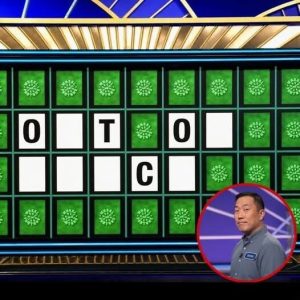
The “Bragging Rights” special of Wheel of Fortune wasn’t just a gimmick—it subtly fixed one of the show’s biggest limitations: lack of real chemistry between contestants.
What Changed (And Why It Matters)
Instead of strangers, the show featured coworkers competing against each other.
That single change created:
- natural banter (not forced small talk)
- real stakes (office bragging rights > random prize hype)
- authentic reactions
And honestly, that’s something most game shows fake—but this one didn’t have to.
Host Impact: Seacrest Played It Smart
Ryan Seacrest didn’t over-control the episode.
He leaned into the relationships, joking about shared histories (like one contestant being another’s pediatrician), which:
- relaxed the contestants
- made viewers feel “inside” the group
That’s a small hosting adjustment—but it makes a big difference in engagement.
The Hidden Psychology: Why It Felt More Intense
You might think this episode was more relaxed. Not really.
It felt relaxed—but the stakes were actually higher.
Why?
Because:
- Losing money = forgettable
- Losing in front of coworkers = remembered forever
That “social pressure” creates a different kind of tension—more personal, less performative.
The Bonus Round: Where Reality Hits
Contestant Sam Oh made it to the final round and missed the phrase:
👉 “Out of Whack”
He answered only: “Out of”
That’s not just bad luck—that’s pressure collapse.
In these moments:
- your brain sees the pattern
- but hesitation kills execution
And that’s the brutal truth of shows like this:
Winning isn’t about knowledge—it’s about speed under stress.
What This Episode Revealed About the Show
This format exposed something important about Wheel of Fortune:
The game itself is simple—but the human element is everything.
When you add:
- real relationships
- emotional stakes
- social dynamics
…it becomes far more watchable.
Should They Do This More Often?
Yes—but carefully.
If every episode becomes “friends vs coworkers,” it loses uniqueness.
The sweet spot:
- occasional specials like this
- keep regular format intact
That way, it feels like an event—not a replacement.
Final Take (Straight Up)
This wasn’t just a fun episode—it was a proof of concept.
The show doesn’t need new rules.
It needs better human dynamics.
And this episode delivered exactly that.
Leave a Reply