
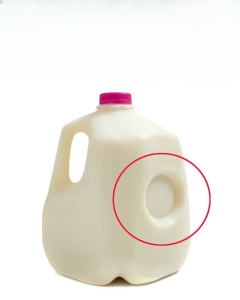
That round “dent” on the side of a plastic milk jug isn’t random—and it’s definitely not a defect. It’s a smart piece of engineering doing several jobs at once.
1. It Controls Internal Pressure
Milk jugs expand and contract with temperature changes and movement.
The circular dent works like a flex zone, allowing the plastic to move slightly instead of cracking.
Think of it as a built-in pressure valve (without actually releasing anything).
2. It Makes the Jug More Durable
During transport, jugs are:
- stacked tightly
- shaken in trucks
- bumped and dropped
That dent helps absorb impact and spread force, so the jug doesn’t split or leak easily.
3. It Uses Less Plastic (But Keeps Strength)
Instead of making the whole jug thicker (which costs more), engineers use shape to add strength.
This dent:
- reinforces the structure
- reduces material use
- keeps the jug lightweight
Less plastic = cheaper production + better for the environment.
4. It Helps With Recycling
When jugs are compressed in recycling facilities, the dent makes them:
- easier to crush
- take up less space
- more efficient to transport
Small design → big impact at scale.
5. It Can Be Used for Branding or Marking
Sometimes that area includes:
- embossed logos
- production codes
- manufacturer marks
It’s a convenient spot that doesn’t interfere with function.
The Big Idea
This is a perfect example of smart engineering:
One simple feature solves multiple problems:
- strength
- flexibility
- cost
- sustainability
Reality Check (Important)
A lot of viral posts exaggerate this, like saying:
- “It pops out when milk goes bad” ❌
- “It’s a safety warning indicator” ❌
That’s mostly myth. The dent is structural, not a freshness indicator.
Final Take
That little circle is doing more work than most people realize.
It’s not decoration—it’s efficient design hiding in plain sight.
Next time you grab a milk jug, you’re holding a small piece of engineering optimization, not just packaging.
Leave a Reply