
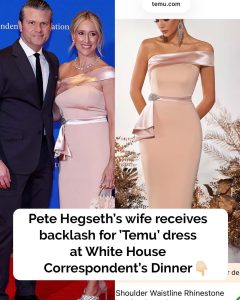
In today’s social media era, even small details from public appearances can turn into major online debates. A recent example involved the wife of Pete Hegseth after the White House Correspondents’ Dinner, where critics online claimed her gown looked like something sold on Temu.
The phrase “Temu dress” spread quickly across platforms, bringing jokes, criticism, and wider conversations about class, fashion expectations, and internet culture.
Why It Went Viral
1. High Expectations at Elite Events
The White House Correspondents’ Dinner is known as a high-profile event where politicians, journalists, and celebrities often wear designer fashion. Because of that, people expect expensive or luxury looks.
2. Social Media Comparison Culture
Users posted side-by-side screenshots comparing the gown to similar dresses sold on Temu or other low-cost fashion sites. Whether accurate or not, those comparisons fueled the narrative.
3. Fashion as Status Symbol
The criticism wasn’t only about style. It reflected assumptions that clothing signals wealth, class, and prestige.
4. Meme Economy
Once jokes start online, they often become bigger than the original story. Humor increases sharing, which drives virality.
Bigger Cultural Questions
This story reflects larger trends:
- Luxury vs affordability – Is expensive fashion still the standard?
- Dupes culture – Affordable versions of designer looks are now common.
- Fast fashion ethics – Sites like Temu are often criticized over sustainability and labor concerns.
- Judging people by appearance – Public figures are increasingly evaluated visually first.
Was It Actually a Temu Dress?
Unless the brand was confirmed publicly, claims remain speculation. Many dresses share common modern designs: off-shoulder cuts, pastel tones, fitted silhouettes, waist bows. Similarity does not prove origin.
What This Really Shows
The real story is less about one dress and more about how fast online narratives form. A single outfit can become:
- a status debate
- a meme
- a class discussion
- a political culture-war topic
Bottom Line
The “Temu dress” controversy says more about internet culture than fashion itself. In a hyperconnected world, appearance is instantly analyzed, compared, and judged. Often, the reaction becomes bigger than the event.
A dress is just clothing. The viral response reveals what audiences project onto it.
Leave a Reply